Skip to content
Use Case: Climate Action Ecology

Geospatial Impact Assessment for River Connectivity Restoration

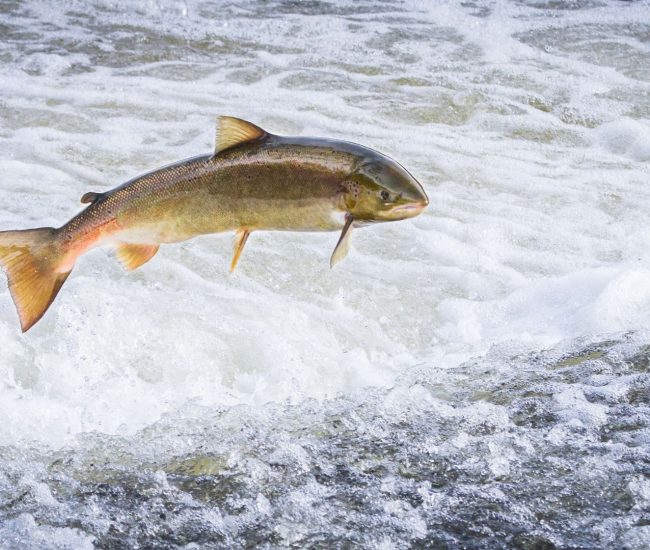
We offer advanced geospatial analysis and data management services designed to support future sustainability initiatives across Europe. One such potential application is the restoration of river connectivity to aid ecological recovery and protect migratory species such as Atlantic Salmon.
Turning Data into Conservation Action

Make informed decisions about river restoration and barrier management. By integrating ecological, hydrological, and climate datasets, the platform allows for precise identification of critical habitats, enabling conservation strategies that are both scientifically sound and geographically targeted.

Balancing Development with Environmental Responsibility

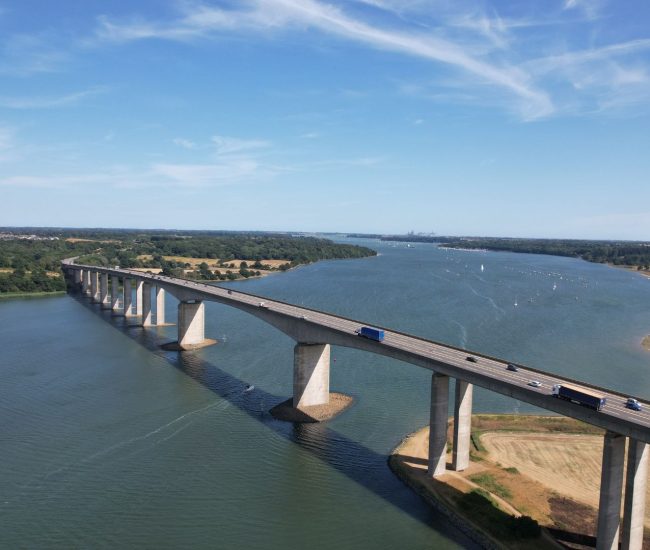
Through comprehensive analysis of river connectivity and ecological indicators, our Impact Analysis helps planners and engineers assess the environmental implications of existing and proposed infrastructure. This ensures that developments such as dams, bridges, and hydropower installations can be optimised to minimise ecological disruption while maintaining operational goals.

Preparing Ecosystems for Long-Term Resilience

By incorporating climate projections alongside historical environmental data, our solutions enables long-term forecasting of habitat conditions. This forward-looking capability supports strategies that are resilient to future temperature shifts and hydrological changes, giving environmental managers a critical advantage in adapting to the effects of climate change.

A Unified View of Complex River Systems

Our use of advanced GIS tools and custom SQL databases allows for the consolidation of diverse datasets—ranging from rod catch reports to global temperature rasters—into a coherent, visual framework. This holistic view simplifies complex environmental data, making it accessible and actionable for diverse stakeholders, from scientists to policy-makers.

The Importance of Geospatial Impact Assessments

Geospatial Impact Assessments are critical in environmental and infrastructure planning. By integrating spatial data with environmental indicators, GIAs offer a holistic view of how natural and human systems interact. These assessments:

  • Provide predictive insights into how environmental interventions (like barrier removals) will impact biodiversity.
  • Enable targeted decision-making by visualising the spatial distribution of impacts and benefits.
  • Support compliance with regulatory requirements related to environmental protection, climate adaptation, and habitat restoration.
  • Allow stakeholders to compare scenarios and select options that deliver maximum ecological benefit with minimal disruption.
Our Solution Overview

Across Europe, rivers are estimated to be fragmented by over one million physical barriers—including dams, weirs, and culverts—that significantly disrupt aquatic ecosystems and biodiversity. A potential geospatial impact assessment would aim to identify, classify, and evaluate these barriers to better understand their effects on stream connectivity and species migration patterns.

The ultimate objective of this approach would be to enable adaptive management strategies, helping stakeholders—such as hydropower operators, river authorities, and environmental planners—achieve a balance between ecological preservation and operational efficiency. This would contribute to enhanced biodiversity, improved energy security, and support for local economies, particularly in rural areas.

Our technologies

We deliver a comprehensive suite of analytical services to generate insights into environmental factors affecting river systems and migratory species.

By applying a range of advanced GIS technologies such as SQL, R, and ArcGIS, TGI could:

  • Merge and analyse river networks at multiple scales—from estuary to sub-basin—to assess connectivity patterns.
  • Develop spatial databases to track and model species population trends using historic and future-projected data.
  • Attribute river segments with ecological quality scores, dendritic connectivity indices, and barrier characteristics.
  • Integrate historic temperature records with climate model projections to forecast how habitat conditions may shift over time.
  • Process large raster datasets and align them with hydrological features to support climate change impact modelling at the river network level.

Map the Impact. Manage the Change. 

15,000km of Rivers Reconnected — With the Right Insight

By applying Geospatial Impact Analysis, local authorities could identify and prioritise the removal or mitigation of up to 40% of ecologically harmful river barriers—restoring natural flow to over 15,000 km of waterways and improving habitat connectivity for migratory species by up to 60%.
How can we help?

Start the Conversation

Get the answers you need. Start your geospatial journey with Tracsis Geo Intelligence and get in touch with our specialists to learn more.

This field is for validation purposes and should be left unchanged.
Name(Required)
Email(Required)
Please let us know what's on your mind. Have a question for us? Ask away.